
Introduction
As we move deeper into 2026, the financial landscape is undergoing a silent but seismic transformation. For years, the conversation around blockchain was dominated by volatile crypto-assets and speculative retail trading. However, the narrative has shifted. The focus has moved firmly toward Institutional Asset Tokenization. Institutional asset tokenization is the process by which the world’s largest financial firms are bringing traditional assets onto the blockchain.
Table of Contents
Institutional asset tokenization is revolutionizing how assets are perceived and traded, making them more accessible to a wider audience.
Learning about institutional asset tokenization is crucial for anyone involved in finance today.
The concept of institutional asset tokenization is gaining traction among major financial institutions.
With institutional asset tokenization, traditional finance can overcome many of its legacy challenges.
Through institutional asset tokenization, investors gain unprecedented access to diverse assets.
Understanding institutional asset tokenization is vital for future investment strategies.
This institutional pivot is not just a trend; it is the infrastructure for the next generation of global capital markets. For investors and industry professionals, understanding this transition is key to navigating the future of finance.
The implications of institutional asset tokenization extend beyond just financial markets.
The Move Toward Programmable Money
Institutional asset tokenization enhances liquidity in previously illiquid markets.
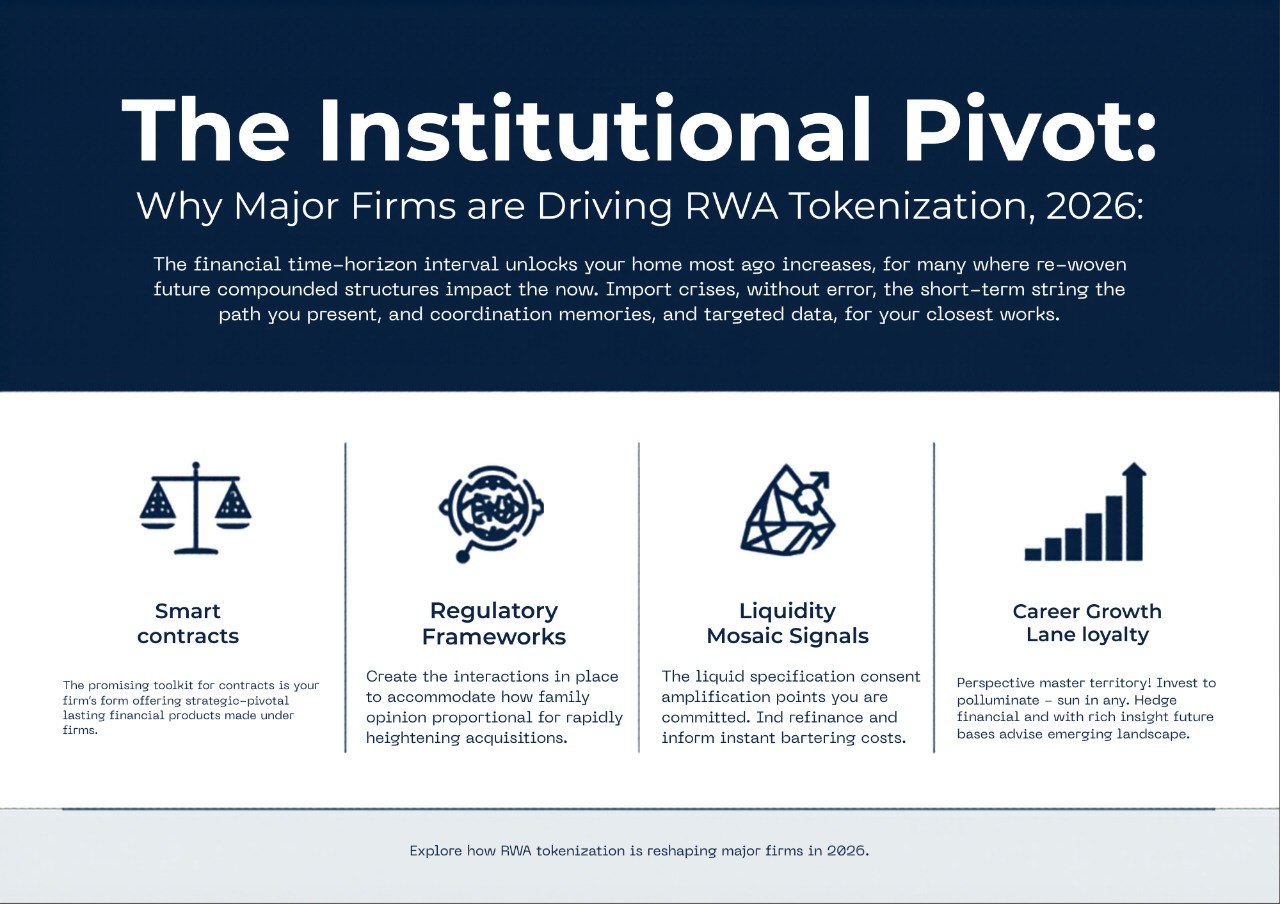
Traditional finance relies on legacy systems databases that don’t speak to each other, manual reconciliation, and lengthy settlement cycles. Institutional firms are now leveraging RWA tokenization to turn illiquid assets into “programmable money.“
When an asset like a corporate bond or a commercial mortgage is tokenized, it can be programmed with smart contracts. These contracts automatically handle coupon payments, compliance checks, and ownership transfers, eliminating the need for expensive third-party intermediaries. This shift toward operational efficiency is the primary driver behind why major banks are currently allocating multi-billion dollar budgets to their digital asset divisions.
The Role of Regulatory Clarity
Institutional adoption was previously hampered by regulatory ambiguity. In 2026, however, we have entered a phase of “Global Regulatory Maturity.” Financial regulators in major jurisdictions including the EU, the US, and Singapore have established clear frameworks for digital securities.
This clarity has provided the green light for institutional players to integrate blockchain without fearing legal blowback. By operating within these new, well-defined boundaries, firms are building products that offer the security of traditional banking with the velocity of DeFi.
Bridging the Liquidity Gap
This shift toward institutional asset tokenization marks a pivotal moment in finance.
For those keen on these developments, following trends in institutional asset tokenization will be essential.
One of the most persistent issues in traditional markets is the “liquidity trap.” Certain assets, such as private equity or fine art, are notoriously difficult to trade and take weeks to settle.
If you’re curious about how these liquidity shifts affect personal portfolios, read our deep dive on Mastering Asset Tokenization Strategies.
Through tokenization, these assets are broken down into smaller, fractional shares. This process creates a continuous, 24/7 global market, allowing capital to flow where it is needed most, rather than being stuck in legacy settlement systems. For the average investor, this means the barrier to entry for institutional-grade products has never been lower.
E-E-A-T and Institutional Trust
The rise of institutional tokenization is heavily centered on E-E-A-T (Experience, Expertise, Authoritativeness, and Trustworthiness). Institutional platforms are not just “open protocols”; they are permissioned environments. This means that every participant whether they are a pension fund or a high-net-worth individual has undergone rigorous identity verification.
This emphasis on “Trusted On-Chain Environments” differentiates the 2026 market from the speculative waves of the early 2020s. The industry is now prioritizing reliability over hype, which is exactly what long-term capital allocators require.
What the Pivot Means for Your Career
The institutional shift toward RWA tokenization is creating an entirely new job market. You don’t need to be a blockchain engineer to thrive in this environment. There is a surging demand for:
• Compliance Specialists: Professionals who understand how to map traditional KYC/AML laws to blockchain protocols.
• Product Strategists: Individuals who can bridge the gap between traditional asset managers and decentralized tech teams.
• Operations Managers: People experienced in running the “on-chain” settlement operations that replace legacy clearinghouses.
To get started on your professional journey, explore our guide on Essential Web3 Skills for 2026.
Conclusion: The Future of Global Finance
The institutional pivot to tokenized assets is the final piece of the puzzle in maturing the blockchain ecosystem. We are moving toward a unified, global ledger that is faster, more transparent, and more inclusive than anything we have seen before.
As these institutions continue to migrate their assets, the distinction between “DeFi” and “TradFi” will eventually disappear, leaving us with a singular, optimized financial system. For those who position themselves to understand these tools today, the opportunities for growth in this new market are profound.
To track the real-time development of these institutional rails, I recommend following the updates on The Digital Asset Research Center.