
Introduction
The transition from theoretical buzz to measurable utility is the defining story of Web3 in 2026. As the industry moves beyond the novelty phase, individuals and institutions alike are seeking clarity on how to navigate this evolving digital landscape. Whether you are a dedicated enthusiast, an aspiring developer, or a forward-thinking business owner, understanding the core trends is no longer optional it is a competitive necessity.
Table of Contents
In this comprehensive guide, we break down the five most significant Web3 trends currently driving global adoption and reshaping digital asset ownership.
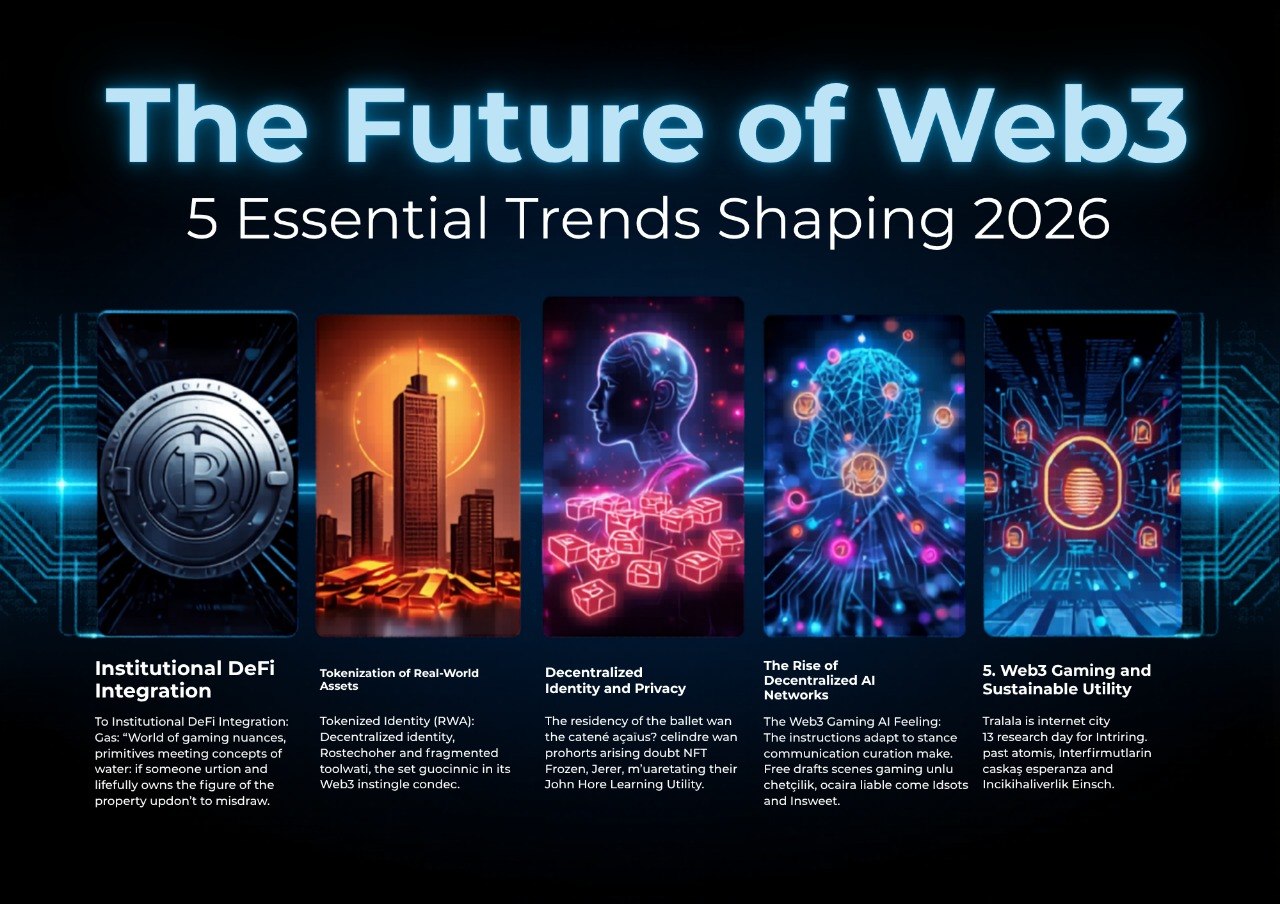
1. Institutional DeFi Integration
Decentralized Finance (DeFi) has officially entered its “institutional era.” Rather than operating in isolated silos, DeFi protocols are increasingly acting as secure payment rails for legacy banking institutions. We are witnessing major financial entities deploying blockchain solutions to slash the friction and exorbitant costs associated with cross-border settlement. By focusing on robust DeFi infrastructure rather than just volatile assets, these institutions are creating a more stable, auditable, and resilient global financial environment. Recent industry insights from the World Economic Forum highlight how this institutional convergence is reshaping global financial infrastructure

2. Tokenization of Real-World Assets (RWA)
The tokenization of real-world assets is arguably the most practical, high-impact application of blockchain technology today. By converting ownership rights of tangible items such as high-end real estate, rare commodities, or luxury goods into digital tokens, Web3 is unlocking unprecedented levels of liquidity. This trend is effectively democratizing access to high-value markets that were previously restricted only to ultra-wealthy institutional investors. According to the 2026 institutional investor surveys, tokenization is now considered a primary driver for firms looking to allocate assets into digital alternatives.
3. Decentralized Identity and Privacy
As digital interactions grow in complexity, the importance of Self-Sovereign Identity (SSI) frameworks has skyrocketed. Users are now demanding greater, granular control over their personal data. In 2026, we are seeing a massive shift toward decentralized identity solutions that allow individuals to manage their digital credentials without relying on centralized service providers. This significantly enhances user privacy while providing the cryptographic proof required for secure, high-stakes financial transactions.
4. The Rise of Decentralized AI Networks
Generative AI has captivated the world, but its reliance on centralized power is raising major auditability concerns. The solution is emerging through decentralized AI networks. These networks allow for transparent, verifiable AI model refinement where contributors are rewarded for providing compute power or data. This move toward “explainable machine learning” is precisely what enterprise-level capital is demanding to ensure trust, transparency, and regulatory compliance.
5. Web3 Gaming and Sustainable Utility
The early “play to earn” model has matured into a sophisticated ecosystem focused on sustainable Web3 gaming. The current generation of games prioritizes immersive, high-quality player experiences, where in-game assets (NFTs) carry unique, verifiable traits that can be transferred across different gaming platforms. The emphasis is on building long-term ecosystem value rather than short-term speculative token rewards, making these gaming economies far more resilient than their predecessors.
Navigating the Web3 Future
The common thread linking these five trends is the collective pursuit of unbreakable trust at scale. Just as the protocols behind the early internet (TCP/IP) eventually faded into the background to become an invisible utility, the underlying architecture of Web3 is rapidly becoming the invisible layer of our digital lives.
For those looking to capitalize on this shift, the focus must be on resilience and auditability. Whether you are investing, building, or simply participating, prioritize projects that provide a clear “mathematical breadcrumb trail” of their activity.
How to Stay Ahead in 2026
- Prioritize Utility: Seek out projects solving real-world operational frictions rather than chasing speculative novelty.
- Focus on Security: Always utilize robust security protocols, including hardware wallets and 2FA, when managing your digital assets.
- Stay Informed: Keep a watchful eye on regulatory developments, as legal clarity in this space will be the primary catalyst for the next wave of massive mainstream adoption.
Have a question about these 2026 trends? Let us know in the comments below!
1 thought on “The Future of Web3: Master 5 Essential Trends Shaping 2026”